

common problem
How to solve the problem of surface strain on drawing molds?
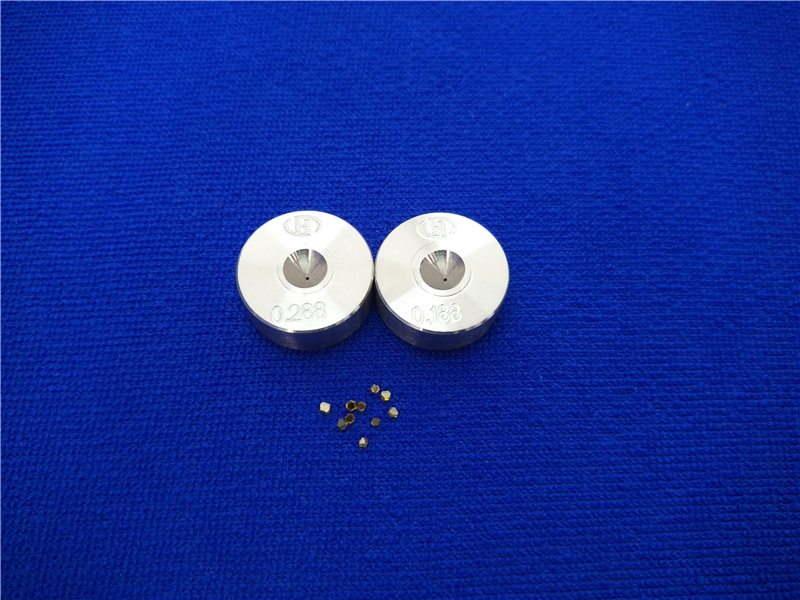
1.Material selection of stretch cold stamping die
If the selected material to be processed is steel,no matter what die steel or cast iron is used,it is generally difficult to solve the problem of strain on the workpiece without any suitable surface treatment.
Starting from the mold convex and concave mold materials to solve the problem of strain on the workpiece,cemented carbide can be used.Under normal circumstances,the convex and concave molds made of this material have high tensile resistance.The problem is that the material cost is high.It is not easy to process.For larger molds,it is difficult to fire large cemented carbide blocks.Even if the firing is successful,cracks may occur in the processing process,the yield rate is low,and some are almost difficult to form.In addition,the hard fat alloy is brittle,so you must be extremely careful during handling,installation and use.A little carelessness may cause chipping or cracking and scrap.In addition,because the structure of the cemented carbide is composed of hard tungsten carbide particles and soft bond phase drills,the hard tungsten carbide particles have high wear resistance and seizure resistance,while the cobalt phase has low hardness and wear resistance.Poor performance.During use,the cobalt phase will be preferentially worn,causing unevenness on the surface of the convex and concave molds.The surface of the workpiece produced in this way will also appear to be drawn.At this time,the convex and concave mold surfaces of the mold must be ground and polished.Reproduction.For austenitic stainless steel workpieces,the surface of the workpiece is strained due to the face-centered cubic structure and the cobalt phase.
The use of suitable copper-based alloys can also solve the problem of workpiece strain,but copper-based alloys generally have low hardness and are prone to excessive wear.In the case of mass production,for larger molds,such as forming molds for automobile panels,A large number of alloy cast iron is used.Cast iron can only reduce the strain on the workpiece,but cannot eliminate the strain problem.To completely solve the strain problem,it needs to be supplemented by surface treatment such as nitriding and hard chrome plating.However,the molds made in this way tend to have a short lifespan.After a period of use,if there is a strain,the mold needs to be repaired and resurfaced.
In terms of mold materials,there are also reports of using ceramics to make convex and concave molds and successfully solve the problem of workpiece strain.Because of its brittleness and high cost,it is impossible to promote and apply in large quantities.
For large-scale drawing molds with small production batches and simple shapes,there are also reports of using rubber and other polymer materials to make mold convex and concave molds.Such molds will not strain the surface of the workpiece,but there are few practical applications.
Two,some methods to solve the problem of stretching die strain
To solve the problem of strain during the forming process of the mold and the workpiece,the basic principle of reducing adhesive wear should be followed,and the starting point should be changed by changing the nature of the contact pair.The three parties that constitute this pair of contact pairs are analyzed below,namely the raw material of the workpiece,the workpiece and the mold,and the mold.
1.The raw material aspect of the formed workpiece
By surface treatment of raw materials,such as phosphating,spraying or other surface treatments on raw materials,a non-metallic mold layer is formed on the surface of the formed material,which can greatly reduce or eliminate the strain on the workpiece.This method is often more costly.High,and need to add additional production equipment and increase the production process,although this method sometimes has some effects,in actual production applications are very few.
2.Between the workpiece and the mold
Adding a layer of PVC film between the mold and the forming material can sometimes solve the problem of strain on the workpiece.For the production line,the film can be continuously supplied through the mechanism,and for the periodic production of stamping equipment,a film needs to be added for each workpiece produced,which affects production efficiency.This method is generally costly and produces a large amount of waste.For small batches It is advisable to use this method for the production of large workpieces.
In some occasions where the forming load is very small,sometimes the problem of strain on the workpiece can be solved by adding lubricating oil or adding EP additive lubricating oil.
3.Mold
By changing the convex and concave ink materials of the mold or performing surface treatment on the convex and concave molds of the mold,the contact properties of the material to be formed and the convex and concave molds are changed.Practice has proved that this is an economical and effective method to solve the strain problem,and it is also a widely used method.
In summary,there are many ways to solve the problem of surface strain on the convex and concave molds of the workpiece and the mold.For specific cases,the application method should be selected according to the size of the workpiece and the load,the production batch,and the type of material to be processed.Among all the methods to solve the strain problem,it is best to use cemented carbide as the mold material and chemical vapor deposition and TD coating treatment on the convex and concave surfaces of the mold.Among them,TD cladding is the most cost-effective.
